The question
Is a domestic or international company offsite better?
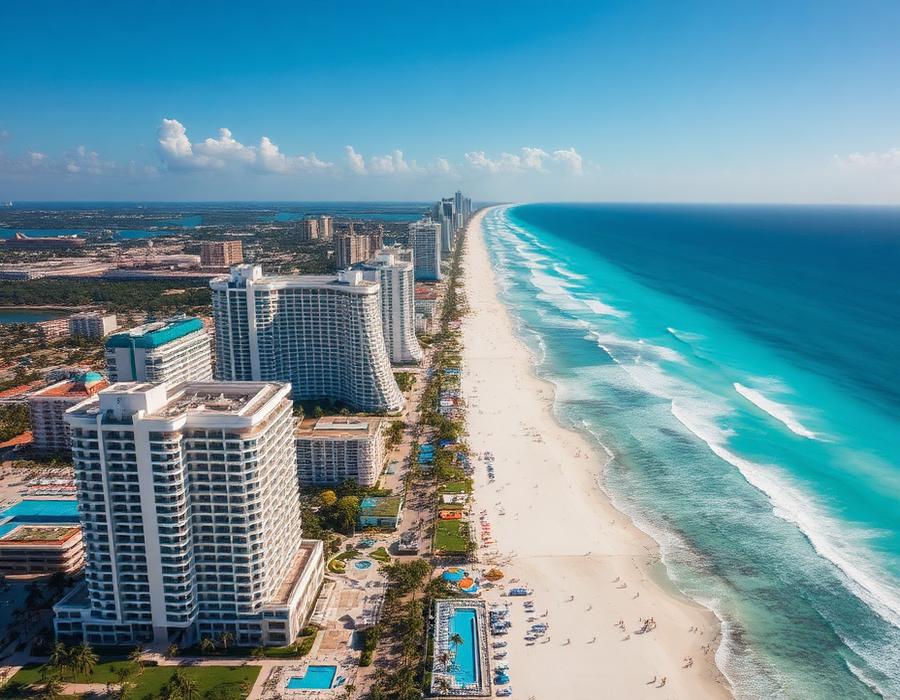
International offsites to destinations like Cancun, Riviera Maya, or Punta Cana often cost within a few hundred dollars per person of a comparable domestic city offsite, once bundled all-inclusive pricing is factored in, and frequently drive higher attendance and satisfaction because employees view the trip as a meaningful perk rather than an extension of the office.
Framing the Real Comparison
The instinct that international travel automatically costs more is based on comparing only airfare, which is incomplete. A fair comparison has to account for the full per-person cost: airfare, lodging, meals, meeting space, transportation, and activities, since destinations differ widely in how much of that is bundled versus billed separately.
Domestic city-hotel programs usually unbundle almost everything — rooms, food and beverage minimums, meeting space rental, and AV are each billed separately and add up quickly in major metro markets. International all-inclusive resorts, by contrast, often roll food, drinks, some activities, and sometimes meeting space into a single nightly rate, which simplifies budgeting even when the headline per-night number looks higher.
Cost Comparison in Practice
For a typical 3-day, 100-person offsite, a domestic program in a major U.S. city often lands between $2,000 and $2,600 per person once hotel, food and beverage, and meeting space are itemized separately. A comparable all-inclusive program in Cancun, Riviera Maya, or Punta Cana often lands between $2,100 and $2,900 per person, with higher airfare partially offset by bundled meals and lower incidental costs on-site.
The gap narrows further for companies based in cities with limited direct international flight access, where domestic connections can add unexpected cost and travel time that erase much of the apparent airfare advantage. Running both scenarios with real quotes, rather than assumptions, is the only reliable way to know which option is actually cheaper for a specific group and set of home cities.
Seasonality also shifts the comparison in ways that are easy to overlook. Domestic conference hotels in major cities often charge peak rates during the same spring and fall weeks that companies prefer for offsites, while resort destinations in Mexico and the Caribbean have off-peak and shoulder-season windows that can lower per-night rates by 15 to 20 percent without sacrificing weather quality. Shifting a planned date by even two or three weeks can change which option comes out ahead financially.
Group size also interacts with this comparison. Larger groups generally get more favorable per-person pricing at all-inclusive resorts, where a single property can absorb the entire group, than at domestic city hotels, where large blocks sometimes have to split across two properties and add transportation complexity between them.
Logistics Differences That Matter
International programs add a few logistics layers that domestic trips do not require: passport validity checks for every attendee, group air coordination (often charter or block seating for larger groups), and on-the-ground transportation from the airport to the resort. None of these are difficult to manage with enough lead time, but they do need to be planned for explicitly rather than assumed away.
Domestic programs have their own hidden logistics complexity, particularly around transportation in cities without strong group transfer infrastructure, and around managing multiple vendors for food, AV, and venue separately. All-inclusive international resorts frequently consolidate most of these vendor relationships into a single property contact, which can actually simplify on-site logistics compared to a domestic multi-vendor city program.
- Confirm passport expiration dates at least 6 months before travel
- Lock group air or charter capacity early for larger groups
- Arrange airport-to-resort transfers as part of the resort contract
- Identify a single on-site point of contact at international resorts
The Attendance Effect
A recurring pattern companies report after switching from domestic to international offsite destinations is a meaningful lift in voluntary attendance and in how employees describe the event afterward, because the destination itself reads as a reward rather than just a relocated meeting. This matters most for reward-based programs like incentive trips or President's Club, but it also shows up in general company offsites and sales kickoffs.
The attendance effect is strongest for destinations with strong all-inclusive resort infrastructure, direct flight access from major U.S. hubs, and reliable weather windows — Cancun, Riviera Maya, Los Cabos, Punta Cana, and the Bahamas all fit that profile for most U.S. company populations. Destinations with longer or less predictable travel times tend to blunt this effect.
When Domestic Still Makes Sense
International is not automatically the right answer for every offsite. Short, single-day or two-day working sessions, programs where several attendees cannot travel internationally due to visa status, or very tight budget constraints with a small group often favor a domestic option close to a major office.
Domestic trips also make sense when the primary goal is intensive working content rather than reward or culture-building, since a nearby city hotel minimizes travel time and maximizes working hours. Matching the format to the objective, discussed in planning guides for offsites generally, is more important than defaulting to either option.
Risk and Contract Considerations by Destination Type
Domestic contracts typically follow familiar U.S. hotel terms, with attrition and cancellation clauses that most HR and procurement teams have seen before. International resort contracts can include different cancellation windows, currency considerations, and force majeure language, which makes it more important to have someone experienced review the terms before signing.
Travel insurance and group medical coverage are also worth evaluating more closely for international programs, even though actual risk levels at established resort destinations in Mexico and the Caribbean are generally low and well-managed by the properties themselves.
How Latitude Helps You Decide
Because the real cost comparison depends so heavily on home-city flight access, group size, and specific destination pricing at the time of booking, a side-by-side quote is far more useful than a general rule of thumb. Latitude Group Travel routinely builds parallel domestic and international proposals for the same group so HR and finance teams can compare real numbers rather than assumptions.
Beyond the cost comparison, Latitude also handles the added logistics layers of international programs — group air, transfers, passport reminders, and contract review — so choosing an international destination does not create additional internal workload for an already busy HR or operations team.
Key takeaways
- Compare full per-person cost, not just airfare, between domestic and international
- International programs often land within a few hundred dollars per person of domestic
- International trips add passport, group air, and transfer logistics to manage
- International destinations often lift voluntary attendance and satisfaction
- Get parallel quotes for both options before deciding