The question
Should we host our sales kickoff at a resort instead of a convention hotel?
A resort works well for an SKO when the group is under roughly 300-400 people and the agenda balances training with recognition and team building; a convention hotel is the safer choice for larger groups or content-heavy agendas needing many simultaneous breakouts. Most mid-size companies get the best of both by choosing a resort with a dedicated conference wing.
What changes when you move from a hotel to a resort
A traditional convention hotel is built around meeting space first: large flexible ballrooms, dozens of breakout rooms, and a sales team built to handle corporate programs at scale. A resort is built around the guest experience first, with meeting space often secondary. That difference shows up in everything from how many breakout rooms are available to how far attendees walk between sessions and their rooms.
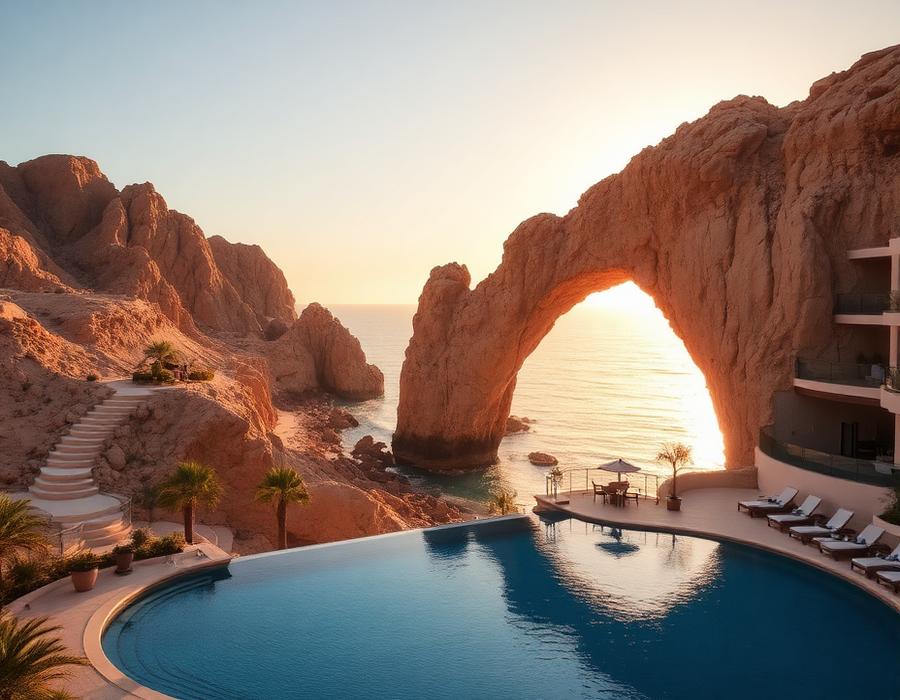
The tradeoff is not simply worse meeting space at a resort. Many resorts in Los Cabos, Riviera Maya, and Punta Cana have added dedicated conference centers specifically to compete for corporate group business, and these spaces can rival a hotel's ballroom capacity while still offering beach access, pools, and restaurants the attendees actually want to experience outside of sessions.
Where resorts clearly win
Attendee experience and morale are the strongest arguments for a resort SKO. Sales teams spend their year on video calls and in generic hotel conference rooms for regional meetings; a resort setting signals that the company is investing in them and gives the week a different energy than a downtown convention hotel. That shift in mood tends to carry into engagement during sessions, not just the evening events.
Resorts also simplify the social and celebration side of the agenda. Outdoor venues for awards dinners, beachfront space for a closing party, and built-in activities like watersports or golf reduce the need to source outside vendors or offsite venues, which is a common cost and logistics burden at urban convention hotels.
- Stronger attendee morale and engagement from a destination setting
- Built-in outdoor space for dinners, awards nights, and closing celebrations
- Activities (golf, watersports, spa) reduce the need for outside vendors
- All-inclusive resort pricing simplifies food and beverage budgeting
Where convention hotels still win
Scale and flexibility favor the convention hotel. Groups over 400-500 people, or agendas with six or more simultaneous breakout tracks, are easier to execute in a purpose-built convention hotel with deep meeting-space inventory and an experienced in-house AV team. Resorts can struggle to offer enough breakout rooms for very large or content-dense agendas, even when the main ballroom is impressive.
Convention hotels also tend to have more predictable AV and staging support because large meetings are their core business, not an add-on to leisure travel. If your SKO depends on a flawless hybrid broadcast or a complex general session production, a hotel with a dedicated convention services team reduces execution risk.
The middle path: resorts with dedicated conference centers
A growing number of resorts in Mexico and the Caribbean have built standalone conference centers adjacent to the resort, giving groups hotel-grade meeting space with resort-grade attendee experience. These properties are worth prioritizing if your group size is in the 150-400 range, since they typically offer enough breakout inventory for a multi-track agenda while still delivering the beach, pool, and dining experience that makes a resort SKO feel different.
When evaluating these hybrid properties, confirm the conference center's breakout count and ballroom capacity directly rather than assuming it matches the resort's overall size. Some large resorts have surprisingly modest meeting space relative to their room count, because their primary business is leisure travel, not groups.
Budget comparison is not as simple as it looks
On paper, resort room rates in Mexico and the Caribbean often run lower than big-city convention hotel rates, especially outside of peak winter season. But a true comparison needs to include meeting space rental (often complimentary at convention hotels with a sufficient room block, but sometimes charged at resorts), AV costs, and F&B minimums, which can be structured very differently between an all-inclusive resort and an a la carte city hotel.
Airfare is the other major variable. A domestic convention hotel in a major hub may have lower average airfare than a resort destination requiring international flights, even if the resort's land cost is lower. Build a full per-person cost model covering airfare, hotel, meeting space, F&B, and ground transportation before comparing two finalist venues on price alone.
- Compare room rate plus meeting space rental plus F&B minimums, not room rate alone
- Factor in whether meeting space is complimentary with the room block
- Model average airfare per attendee for each finalist destination
- Account for ground transportation costs, which can be higher at resort destinations
Questions to ask before committing to a resort SKO
Ask how many breakout rooms the resort's conference center or meeting wing has, and whether any of them are used for other groups during your dates. Shared meeting space is common at resorts and can create scheduling conflicts or noise bleed between groups that would not happen at a dedicated convention hotel.
Also confirm transportation logistics for attendees arriving from multiple cities. Resort destinations sometimes require a transfer from the airport that adds 45-90 minutes to arrival day, which needs to be built into the agenda and communicated clearly so day-one sessions are not disrupted by late arrivals.
How Latitude helps you weigh the tradeoff
Latitude Group Travel maintains relationships with resort conference centers and convention hotels across Mexico and the Caribbean, so the recommendation we bring you is based on your group size and agenda, not a single preferred property type. We build the full per-person cost model, including airfare and ground transportation, so the resort-versus-hotel decision is grounded in real numbers rather than a general sense that one option feels more affordable.
When a resort is the right fit, we also handle the vendor coordination that resorts sometimes lack in-house, from outside AV providers to offsite dinner venues, so the attendee experience benefits of the destination do not come with added logistics burden on your team.
Key takeaways
- Resorts work best for SKOs under roughly 300-400 people with a culture-building focus
- Convention hotels remain stronger for larger groups or many simultaneous breakouts
- Resorts with dedicated conference centers offer a middle path worth prioritizing
- Compare full per-person cost, not just room rate, across resort and hotel options
- Confirm breakout room availability and transportation logistics before committing